





Eye For Film >> Movies >> Palestine 36 (2025) Film Review


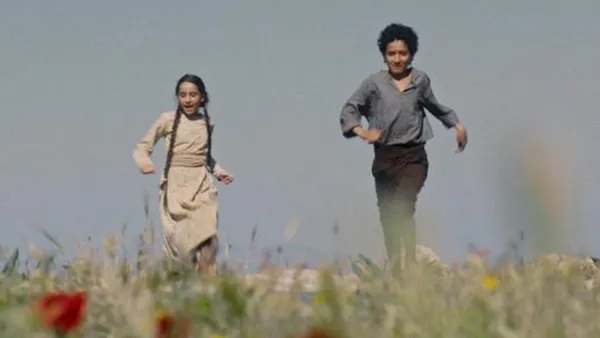

Palestinian director Annemarie Jacir's period drama Palestine 36 looks back to the Arab Revolt of 1936 and 1937. The influx of Jewish immigrants meant tensions had been escalating since as early as 1933. The British, however, who governed Palestine, failed to take seriously the concerns of rural Palestinians, who were losing land because of the Jewish migration. There would be a series of escalating incidents, but the final blow was when the Peel Commission, led by Lord Peel, decided to not only partition the land, that mandated the forcible removal of Palestinians from their ancestral lands, but also gave the Jewish settlers statehood. This was a blatant act of impartiality because the Commission denied the Palestinians the same privilege, who had hopes of their own government.
Under Jacir's assured direction, Palestine 36 is blessed with a patience that allows the escalating hostility and violence to slowly simmer. Jacir is never in a rush to reach the height of the conflict. Instead, she understands that the politics of the situation are the main point of interest, and imbue the uprising with a feeling of despair, as we witness a David versus Goliath story unfold. Whether it's through dialogue or violence, we feel the desperation of a people that simply want dignity and respect. Their reasonable hopes or dreams, however, pit them against the will of the ruling British, who determine that Palestinians live in the shadow of a Jewish state, even if there are those lonely British statesmen sympathetic to the Palestinian cause.

Jacir articulates the broader political themes and concerns through scripted exchanges between her characters, but it's the way she uses their faces to convey the finer details that is striking. Palestine 36 comes at a time when we desperately need to be reminded of the roots of the Palestinian-Israeli conflict, that pre-date the Hamas attacks of 7 October 2023. It becomes a means to, if not hold Britain and western nations to account, then remind these nations that history has documented their accountability whether or not they choose to acknowledge it.
The prejudice and impartiality we see unfold in Palestine 36 is a troubling reminder of what has been witnessed in present-day responses by governments to the escalating crisis. It's also a statement about how we struggle to learn from the past.
Palestine 36 is an anti-colonialist film that forces us to consider the far-reaching implications of colonialism and the collapse of empire at the end of the First World War. Jacir's film might look back to the 1930s but it's a film that is in conversation with the present-day.
At nearly 120 minutes, what might be missing is a little historical context to the film, addressing how the situation bleeds out of the aftermath of the First World War and the British refusal to grant Arabs their freedom after the defeat of the Ottoman empire. Instead, the Ottoman territories in the Middle East were partitioned, falling under either British or French rule.
It's important to view Palestine 36 as part of a broader historical conversation. Even at its end, we're looking to how these events will shape Palestine's future, but there's a murky history that shouldn't be forgotten.
Jacir's film is well paced, exploring the political manoeuvrings while delivering compelling scenes of action as hostilities escalate. At its heart Palestine 36 is a story about arrogance and ignorance, and the failure to listen — the British who are so protective of their imperialistic ego are vulnerable to the audience's condemnation. More importantly, Jacir keeps the conversation alive of the true roots of a present-day catastrophe, and the historic refusal to give Palestinians a state while accommodating a Jewish State is something we in the international community must reckon with.
Palestine 36 played in the Journey section of the 69th BFI London Film Festival. It is in UK theatres now and will play in the Best of the Festivals programme at PÖFF29 in November.
Reviewed on: 09 Nov 2025


Director: Annemarie Jacir
Writer: Annemarie Jacir
Starring: Jeremy Irons, Robert Aramayo, Liam Cunningham, Billy Howle, Christopher Villiers, Hiam Abbass, Sam Hoare, Yasmine Al Massri, Nicholas Moss, Mo'min Swaitat
Year: 2025
Runtime: 115 minutes
Country: France, Palestinian Occupied Territories, Qatar, Saudi Arabia, UK, Denmark, Jordan, Norway, US
Search database: